
New U.S. Entry Regulations in 2026: What Travelers and Businesses Need to Know
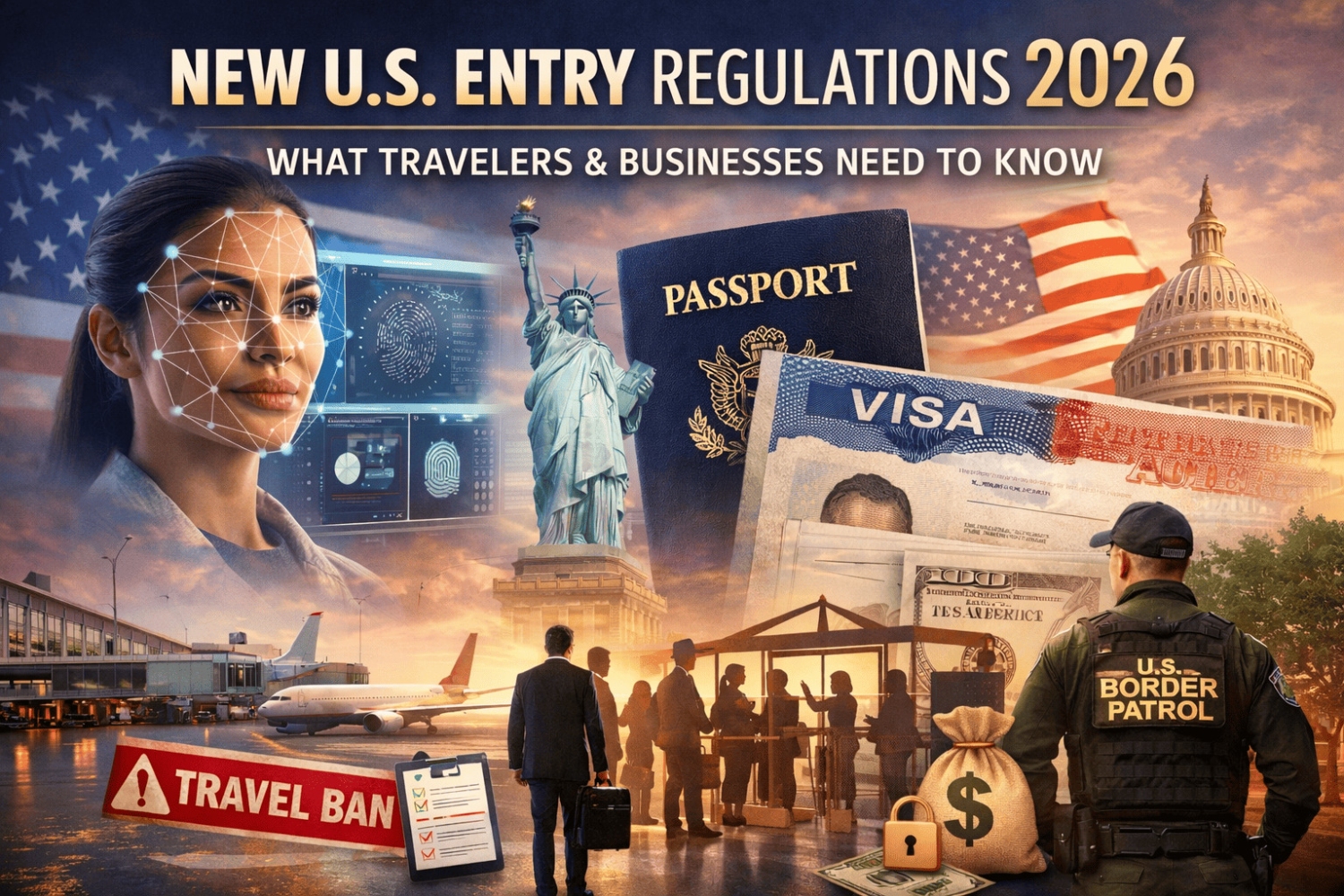
This article provides a concise overview of the most important updates, helping individuals, businesses, and stakeholders in the tourism and aviation sectors stay informed and prepared.
1. Expansion of the Biometric Entry–Exit System
From late 2025 and fully enforced throughout 2026, the United States has expanded its Biometric Entry–Exit system across most international airports, seaports, and land border checkpoints.
Key points include:
- All foreign nationals entering or departing the U.S. are required to provide biometric data, primarily facial recognition images;
- In certain cases, additional data such as fingerprints or other biometric identifiers may be collected;
- The system aims to enhance national security, monitor visa compliance, and reduce overstays.
This process is now considered a standard requirement, even for short-term visitors.
2. Expanded Visa and Entry Restrictions for Certain Countries
Effective January 1, 2026, the United States has expanded visa issuance and entry restrictions affecting nationals of approximately 40 countries under updated security proclamations.
Notable aspects include:
- Some countries face a temporary suspension of new visa issuance for specific categories such as tourism, business, study, or immigration;
- Other countries are subject to partial restrictions, limited to certain visa types (including B-1/B-2, F, J, and M);
- Individuals holding valid visas issued before the effective date are generally not affected, unless subject to individual revocation decisions.
The list of restricted countries will be reviewed every 180 days and may be adjusted based on security assessments.
3. Stricter Requirements for the ESTA System
For travelers from countries participating in the Visa Waiver Program (VWP), ESTA applications in 2026 may require expanded disclosures.
Additional information may include:
- Social media history covering the past five years;
- Email addresses and phone numbers previously used;
- Contact details of an immediate family member;
- In some cases, a selfie or supplementary identity verification data.
These measures are designed to improve pre-departure security screening before travelers board flights to the United States.
4. Introduction and Expansion of the “Visa Bond” Program
The United States has introduced and expanded a pilot Visa Bond program targeting nationals from selected countries with higher visa overstay rates.
Under this program:
- Applicants for tourist or business visas (B-1/B-2) may be required to post a financial bond ranging from USD 5,000 to USD 15,000;
- The bond is refundable upon timely departure from the U.S. in compliance with visa conditions;
- The initiative aims to deter overstays and improve compliance with immigration rules.
5. Impact on Tourism, Aviation, and International Business
These regulatory changes are expected to:
- Extend processing and preparation times for visa and ESTA applications;
- Increase coordination requirements among airlines, airports, and ground handling service providers for document verification;
- Add compliance pressure for travel agencies and companies involved in international travel, business operations, investment, and education in the U.S.
For the aviation sector in particular, ensuring passengers meet all entry requirements prior to departure has become a critical operational priority to avoid penalties, denied boarding, or refused entry upon arrival.
Conclusion
The year 2026 marks a phase of heightened enforcement and accelerated digitalization in U.S. entry and immigration policy. Travelers, corporations, and service providers are advised to stay up to date, prepare documentation well in advance, and comply fully with the new requirements to ensure smooth international mobility.
Understanding and adapting to these changes will be essential for maintaining effective global connectivity in an increasingly regulated international travel environment.
Older articles

How To Speed Up “In Processing” Vietnam E- Visa Application
If you’re wondering what you can do to speed up your pending Vietnamese e-visa...

Long Thanh International Airport: Final Countdown to 2026...
As of late April 2026, the construction site of Long Thanh International Airport...

State Department slashes fee to renounce US citizenship by...
The cost for Americans who wish to formally renounce their United States...