
How Oil-Producing Countries Influence the Global Aviation Industry
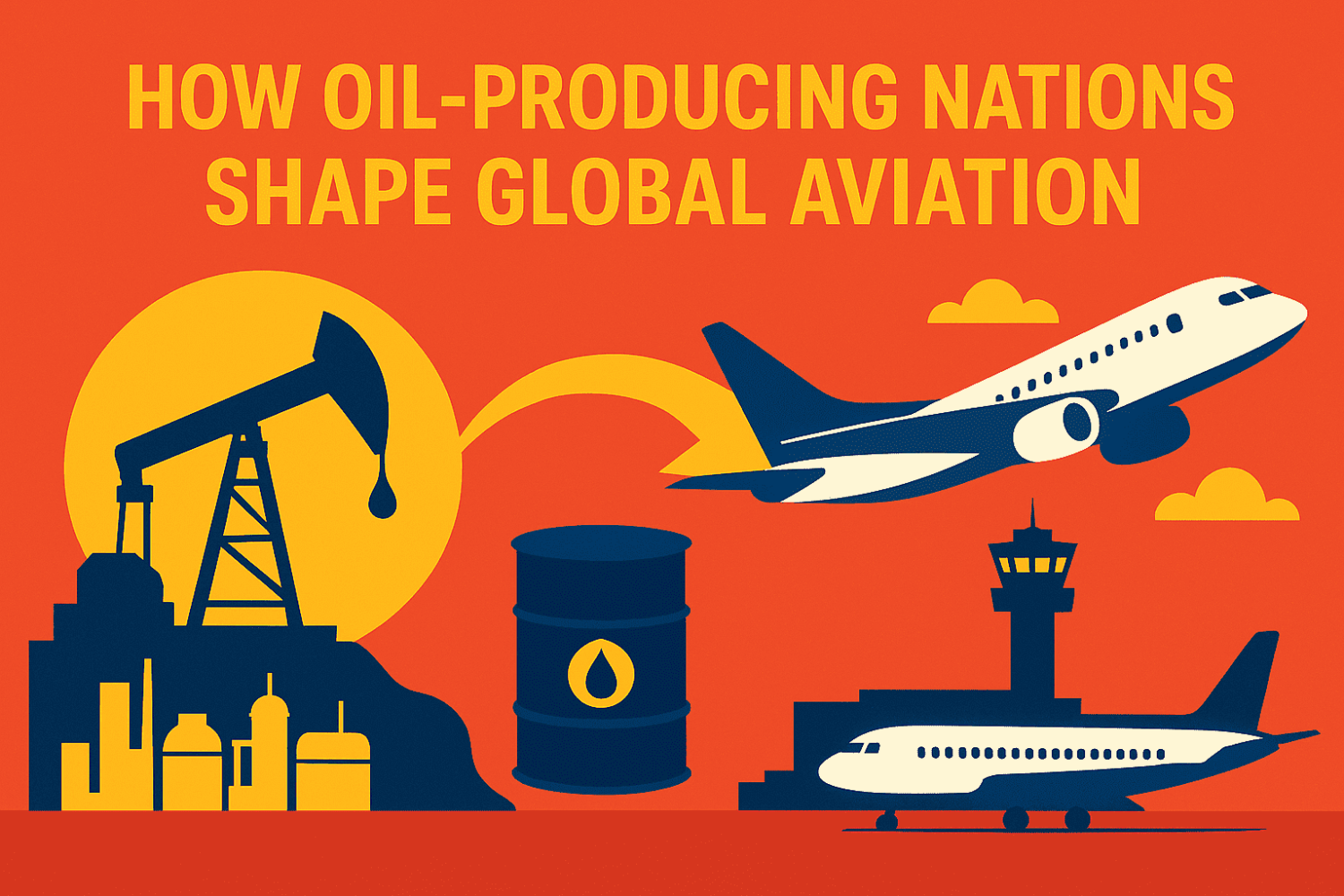
Aviation stability will depend on whether these nations adopt a collaborative, forward-looking strategy—or use supply as a geopolitical tool.
1. How Oil-Producing Nations Shape Global Aviation
Oil-exporting countries (especially OPEC and major Middle Eastern producers) influence global aviation in several direct and indirect ways:
• Fuel price control
Jet fuel originates from crude oil. When oil-producing nations adjust output, airlines immediately face higher or lower operating costs. When oil prices drop, airlines enjoy lower fuel expenses and may reinvest in fleet expansion or profitability.
• Geopolitical and economic leverage
OPEC members can influence global supply by coordinating production levels. This gives them significant geopolitical leverage, shaping how markets access petroleum-based aviation fuel.
• Shift toward Sustainable Aviation Fuel (SAF)
Gulf producers, particularly the UAE and Saudi Arabia, are investing in SAF to maintain long-term relevance as aviation moves toward decarbonization. Their refinery i
nfrastructure gives them an advantage in scaling SAF production.
• Supply risks and volatility
Conflicts, sanctions, or political disruptions can destabilize oil supply, triggering price spikes that directly impact airline profitability and route planning.
2. Possible Future Scenarios
• Positive scenario
Oil-producing nations become major SAF suppliers, enabling a greener, more stable future for aviation while retaining their energy dominance.
• Risk scenario
If they weaponize supply cuts, jet fuel prices could swing sharply, hurting smaller airlines and emerging markets.
• Energy-transition scenario
As SAF becomes more affordable, oil nations diversify away from crude, establishing themselves as long-term energy partners for aviation.
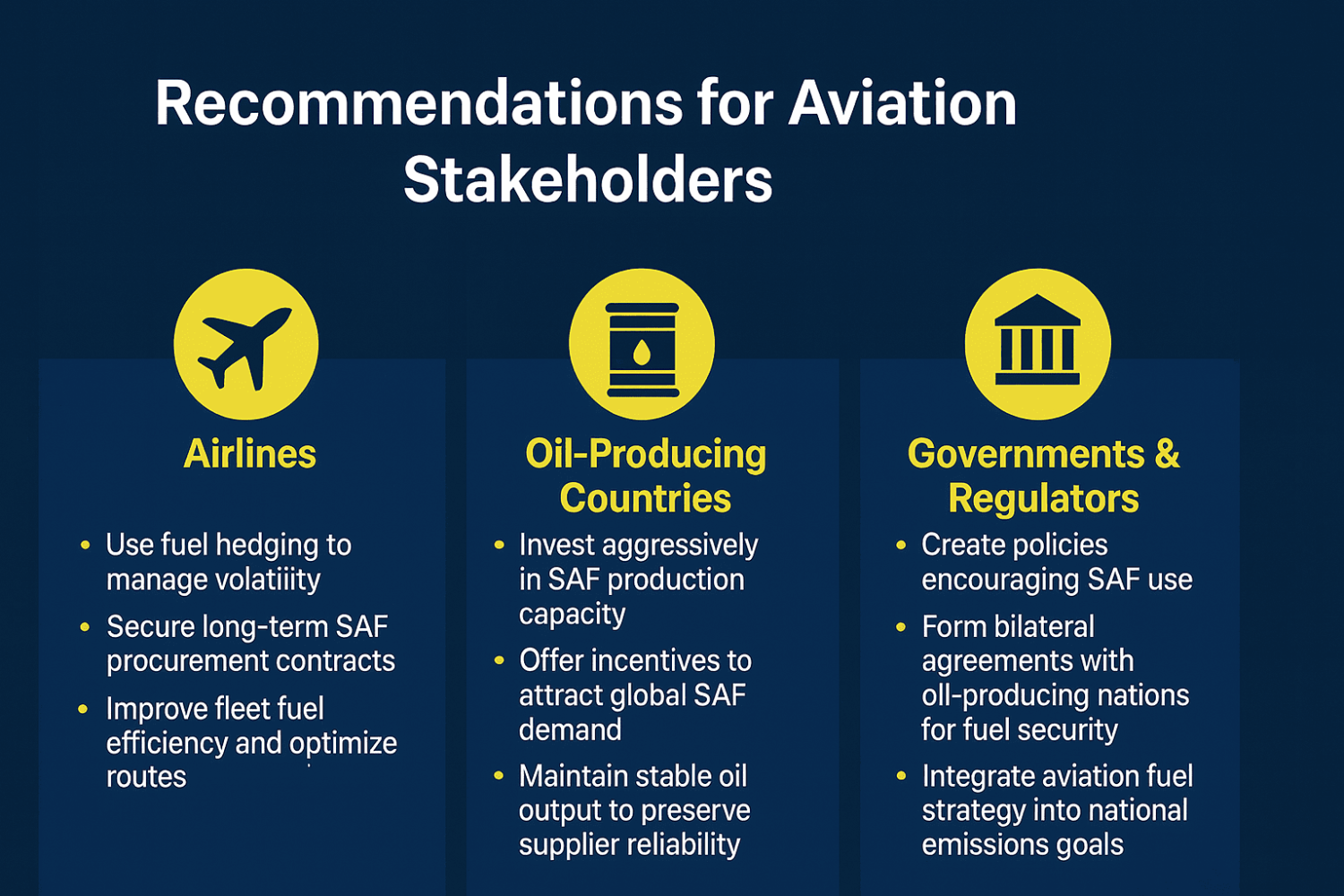
3. Recommendations for Aviation Stakeholders (to be turned into an infographic)
(This section will be transformed into an image in the next message.)
Airlines
- Use fuel hedging to manage volatility.
- Secure long-term SAF procurement contracts.
- Improve fleet fuel efficiency and optimize routes.
Oil-Producing Countries
- Invest aggressively in SAF production capacity.
- Offer incentives to attract global SAF demand.
- Maintain stable oil output to preserve supplier reliability.
Governments & Regulators
- Create policies encouraging SAF use.
- Form bilateral agreements with oil-producing nations for fuel security.
- Integrate aviation fuel strategy into national emissions goals.
4. Conclusion & Expert View
Oil-producing nations will continue to hold substantial influence over global aviation for decades. Their power will no longer come solely from controlling crude oil supply but increasingly from shaping the future of sustainable aviation fuels.
Aviation stability will depend on whether these nations adopt a collaborative, forward-looking strategy—or use supply as a geopolitical tool.
Older articles

How To Speed Up “In Processing” Vietnam E- Visa Application
If you’re wondering what you can do to speed up your pending Vietnamese e-visa...
Long Thanh International Airport: Final Countdown to 2026...
As of late April 2026, the construction site of Long Thanh International Airport...

State Department slashes fee to renounce US citizenship by...
The cost for Americans who wish to formally renounce their United States...